Whether you’re outfitting a shared workspace or a corporate environment, LED strip lighting offers a versatile and energy-efficient solution. At AuraLED, we believe lighting should go beyond mere function — it should inspire productivity, enhance mood, and seamlessly integrate with your interior design.
In this guide, we’ll share a wide range of office LED strip light ideas, including practical applications, creative inspiration, smart integrations, and everything in between. By the end, you’ll be equipped with the knowledge to transform your workspace into something truly exceptional.
Why Choose LED Strip Lights for the Office?
Before we dive into specific ideas, it’s worth understanding why LED strip lights are a game-changer for office design.
1. Energy Efficiency and Sustainability
LED technology uses significantly less electricity compared to traditional fluorescent or incandescent lights. For businesses looking to reduce operational costs and their carbon footprint, strip lighting offers a smart solution.
2. Mood and Productivity Boost
Cool white lighting (5000K and above) mimics natural daylight, promoting alertness, reducing fatigue, and supporting better focus — especially during long hours of screen time. On the other hand, warmer tones can help to wind down and reset, which is ideal for breakout spaces or late evenings.
3. Design Flexibility
LED strip lights are slim, adaptable, and easy to conceal. Whether you’re aiming for a minimalist under-desk glow or a statement ceiling feature, they allow creativity without compromising space or function.
4. Customisation and Smart Control
With the rise of smart technology, many LED strips now support app or voice control. You can change colour temperatures, brightness levels, or even set automated schedules — all with ease.
Top Office LED Strip Light Ideas to Transform Your Workspace
Here’s a selection of the most effective, creative, and impactful ways to use LED strip lights in office environments:
1. Under-Desk LED Glow
Installing LED strips beneath desks is one of the most popular ways to add ambient lighting. Not only does it look sleek and contemporary, but it also helps to reduce eye strain by softening the contrast between a screen and the surroundings.
We recommend using neutral or cool white strips under a desk to maintain focus throughout the day. For larger desks or banks of desks, a 24V strip provides more consistent brightness across longer spans.
2. Backlit Monitors and Screens
Bias lighting—the technique of adding light behind a screen—enhances visual comfort and improves perceived contrast. It is particularly beneficial for design studios, editing suites, or those spending long hours in front of a monitor.
Cool whites work well here, but RGB options can add a dynamic touch for presentations or video calls.
3. Shelf and Storage Illumination
Highlight shelving units or built-in cupboards with LED strip lighting. This can bring attention to awards, important documents, or simply help locate items more efficiently. Using LED profiles or diffusers helps achieve a refined finish and avoids visible hotspots.
4. Cove and Ceiling Perimeter Lighting
Perimeter ceiling lighting — also known as cove lighting — creates a gentle halo effect that reduces harsh shadows and adds architectural depth. It’s particularly effective in meeting rooms or creative spaces, offering a sense of calm while retaining visual interest.
With smart controls, you can even change colours or dim levels depending on the activity in the room.
5. Feature Wall Accent Lighting
Strip lights can be used to frame or highlight feature walls, murals, or branded graphics. This is ideal for creating a striking backdrop in reception areas, conference rooms, or collaborative zones.
For a subtle, professional look, opt for a soft neutral white. For bolder designs, RGB strips allow you to switch tones with a touch.
6. Integrated Cabinet and Drawer Lighting
For offices with shared storage or kitchenettes, integrated LED strip lights inside drawers or cupboards enhance visibility and add a touch of sophistication. Motion-activated lighting is especially practical here, ensuring lights are only on when needed.
7. Floating Furniture Effects
Give the illusion of floating workstations, shelves, or counters by placing LED strips underneath. This trick is frequently used in modern retail and hospitality environments, and it translates beautifully into offices looking for a premium edge.
Warm or neutral whites work best to maintain elegance, particularly in client-facing areas.
8. Zoning Open Plan Spaces
In open-plan layouts, lighting can act as a subtle yet effective zoning tool. Using different colour temperatures or intensities in various zones — such as focus areas, collaboration corners, or lounges — helps define the purpose of each space without adding partitions.
RGBW strips offer flexibility here, allowing colours to be adjusted based on the time of day or activity.
9. Highlighting Architectural Features
Accentuate beams, archways, wall niches or even staircase handrails with strip lighting. This not only elevates your space visually but also adds subtle illumination to areas that may otherwise go unused.
COB (Chip-on-Board) LEDs are a strong choice for seamless light lines in such applications.
10. Breakout and Wellness Zones
Areas designed for decompression, informal meetings, or wellness breaks benefit from softer lighting. Consider installing warm white or pastel RGB strips under benches, along plants, or behind decorative features.
Lighting here should be calming, not clinical. Incorporate dimmers to adjust levels as needed throughout the day.
Choosing the Right LED Strip Lights for Office Use
The ideal lighting solution depends on your objectives, layout, and desired atmosphere. Here’s what to consider:
Voltage: 12V vs 24V
- 12V strips are ideal for small desks and shorter runs.
- 24V strips are better for longer runs as they provide consistent brightness with reduced voltage drop.
Brightness and Lumen Output
Higher lumens are suitable for task lighting or larger spaces, whereas lower-output strips can be used for ambient or accent lighting.
Colour Temperature
- Warm White (2700K–3000K): Ideal for relaxation zones, lounges, or break areas.
- Neutral White (3500K–4000K): Versatile for general office use.
- Cool White (5000K–6500K): Best for focused work, mimicking daylight.
CRI (Colour Rendering Index)
Aim for a CRI of 90+ for accurate colour representation — essential in design, fashion, or photography-related workspaces.
IP Rating
- IP20: Suitable for dry indoor spaces.
- IP65/IP67: Required for kitchens, bathrooms, or anywhere with moisture.
Installation Tips for a Professional Finish
While LED strip lights are often marketed as DIY-friendly, achieving a clean, long-lasting, and visually cohesive result requires planning and attention to detail. Whether you’re installing a few strips under a desk or designing an intricate layout across multiple zones, these tips will help ensure a seamless finish that reflects the quality and precision you expect from your office environment.
Plan Your Layout with Precision
Begin by sketching out your lighting zones. Consider the function of each area — task lighting, ambient glow, decorative accents — and select strip types accordingly. Measure all surfaces meticulously, accounting for corners, edges, and gaps where connectors might be needed. If your design includes colour zoning or dimming, note where your controllers and power supplies will sit.
For larger or more complex installations, it’s worth creating a scaled layout or using digital planning tools. This helps you calculate power requirements and avoid common pitfalls like uneven brightness or awkward strip placements.
Prepare Surfaces Thoroughly
The adhesive backing on LED strips is only as effective as the surface it’s applied to. For maximum hold, all surfaces must be clean, dry, and free of dust or grease. Use isopropyl alcohol or a degreasing agent to wipe down the area and allow it to dry completely before applying the strip.
In environments like kitchens or near electronic equipment, where dust and oils accumulate more quickly, surface prep becomes even more important. For porous or uneven surfaces, consider using mounting clips or LED channels for extra stability.
Use LED Profiles or Diffusers for a Sleek Look
LED profiles (also known as aluminium extrusions) serve both a functional and aesthetic purpose. They provide a clean housing for your strips, help with heat dissipation, and allow you to add diffusers for a smooth, professional lighting effect.
Diffusers soften the light output, eliminate visible diodes (known as “spotting”), and are especially useful when the lighting is in direct view — such as under shelves, along walls, or in open-plan ceiling coves.
At AuraLED, we offer a selection of surface-mounted, recessed, corner, and pendant profiles to suit a variety of installation styles.
Conceal Cabling and Connections
Even the most elegant lighting scheme can be undermined by visible wires or bulky connectors. Aim to run cables along existing lines — behind desks, under cabinetry, or within trunking systems. Use adhesive-backed cable clips or conduit tubing to keep everything tidy.
Where possible, place controllers, power supplies, and amplifiers out of sight — inside drawers, behind furniture, or within ceiling cavities. If you’re installing RGB or RGBW strips, make sure the connectors are compatible and firmly secured to avoid flickering or dropouts.
Choose the Correct Power Supply and Accessories
A common oversight in LED strip installations is mismatching the power supply to the total wattage of the strips. Always calculate the total power draw of your setup (strip wattage × length), then choose a transformer or driver that exceeds this figure by at least 10–20% for safety and longevity.
Be sure to match the voltage (12V or 24V) of the strip to the power supply. Mixing these can result in immediate failure or, worse, a safety hazard. If you’re using dimmers, motion sensors or smart controllers, ensure all components are voltage-compatible and designed to work together.
Test Before Final Fixing
Once you’ve mapped your layout, cut your strips (only at the designated points), and connected your components, test the entire system before securing anything permanently. Check for consistent brightness, proper colour output, and functioning dimming or control features.
This is your chance to make adjustments before finalising — it’s far easier to reposition a loose strip than one fixed under a diffuser or profile.
Consider Heat Management for Longevity
While LED strip lights run cooler than traditional lighting, heat can still build up, particularly with high-output or COB strips. If strips are run for long periods, installed in enclosed spaces, or placed near heat-sensitive materials, proper heat dissipation is crucial.
LED profiles help with this, but for heavier-duty applications, consider additional ventilation or spacing to keep components cool. Overheating not only shortens the lifespan of the strip but can also degrade adhesives and plastic components over time.
Frequently Asked Questions
Are LED strip lights suitable for all office types?
Absolutely. Whether you’re outfitting a small office or a full-scale commercial workspace, LED strips adapt to a variety of setups and styles.
Can I use LED strip lights alongside traditional overhead lighting?
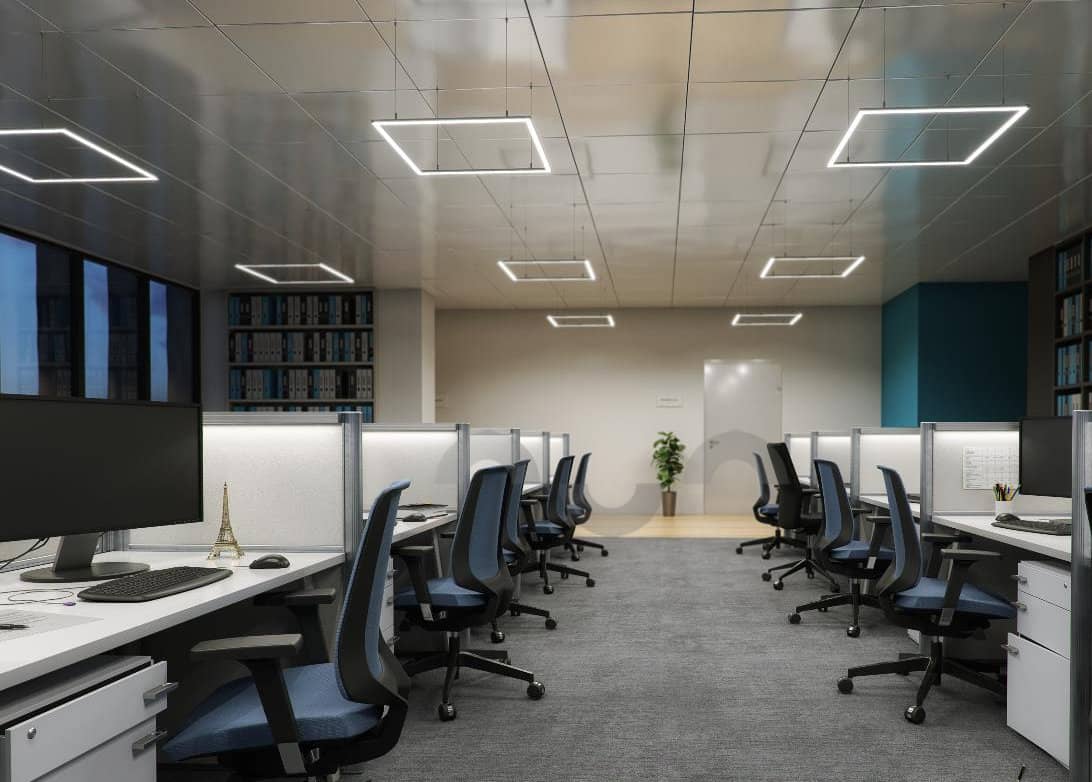
Yes. In fact, LED strip lighting complements overhead fixtures beautifully, adding depth and dimension to the space.
How do I know what colour temperature to choose?
Think about how the space will be used. For focused work, opt for cooler tones. For relaxation or creativity, warmer tones are ideal. Adjustable strips provide flexibility if you’re unsure.
Are LED strip lights expensive to run?
Not at all. LEDs are among the most energy-efficient lighting options available. Over time, the savings on electricity and maintenance outweigh the initial cost.
Can I install them myself?
Most strips are DIY-friendly, especially those with adhesive backing. However, for complex installations or integrated systems, we recommend consulting a qualified electrician.
Ready to Light Up Your Office?
At AuraLED, we specialise in premium LED strip lighting solutions tailored to both commercial and home office environments. Whether you’re creating a bold new design or enhancing your existing space, we’re here to help illuminate your ideas.
Explore our full range of LED strip lights and accessories today — and discover how you can turn your workspace into a beacon of productivity, style, and comfort.